
Contracts are the money committed — coming in on the main contract, going out to suppliers. Cost items are the individual changes that move between them.
This topic includes:
Contracts
A contract is either a main contract — the money you are owed — or a supplier contract, the money you owe. Each carries a number, a supplier, an original amount, a retention percentage and a status from draft through to executed.
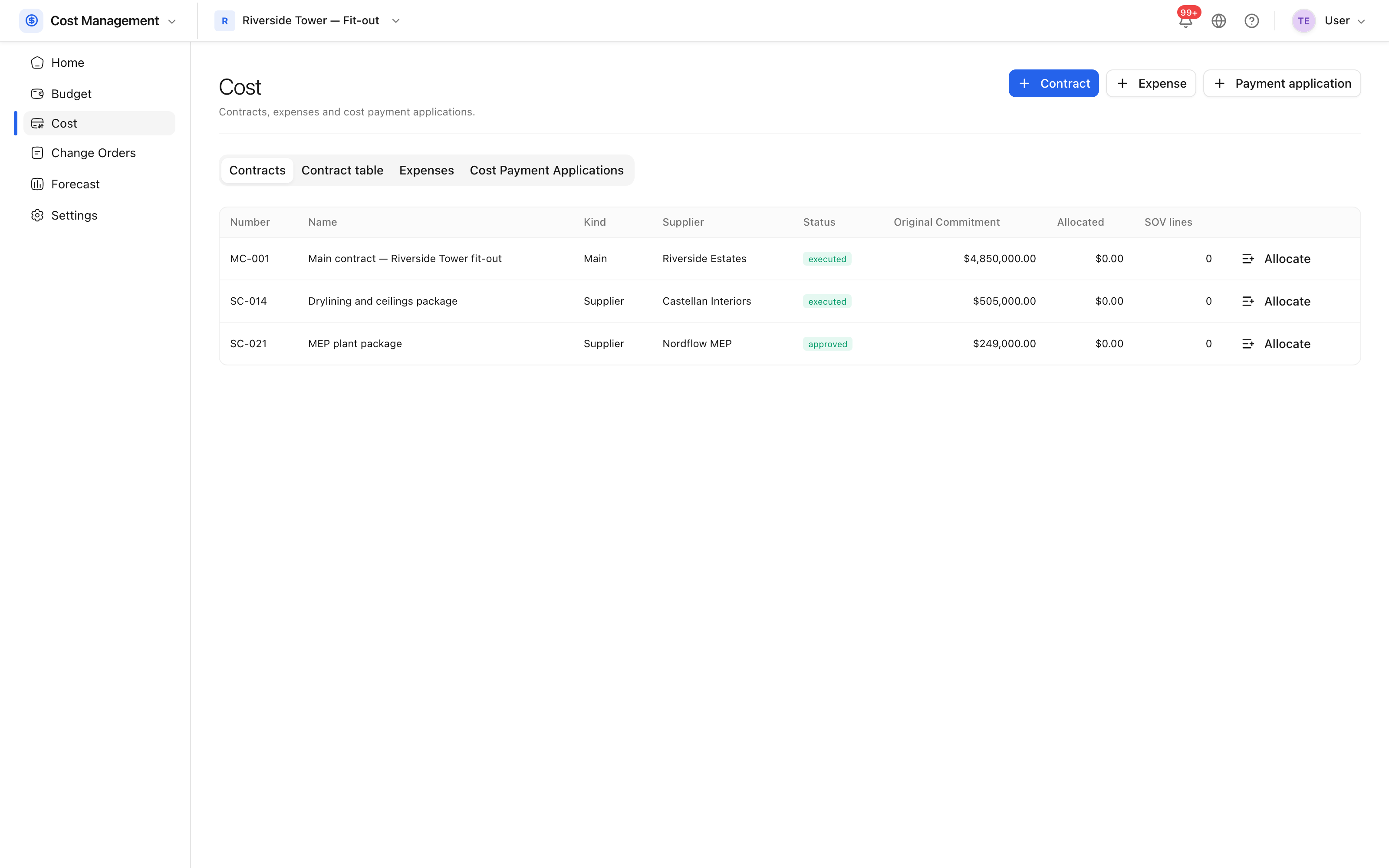 Contracts on the project, with their original amounts and statuses.
The schedule of values
A contract is broken down against budget lines: which budget each part of the contract is drawn from, and for how much. That breakdown is what lets the product answer "how much of the partition budget is actually committed".
Cost items
A cost item is one change with a value: additional acoustic lining, an upgraded air handling unit, an emergency light that was not on the drawings. Each points at a budget line and, usually, at the contract it will be delivered under.
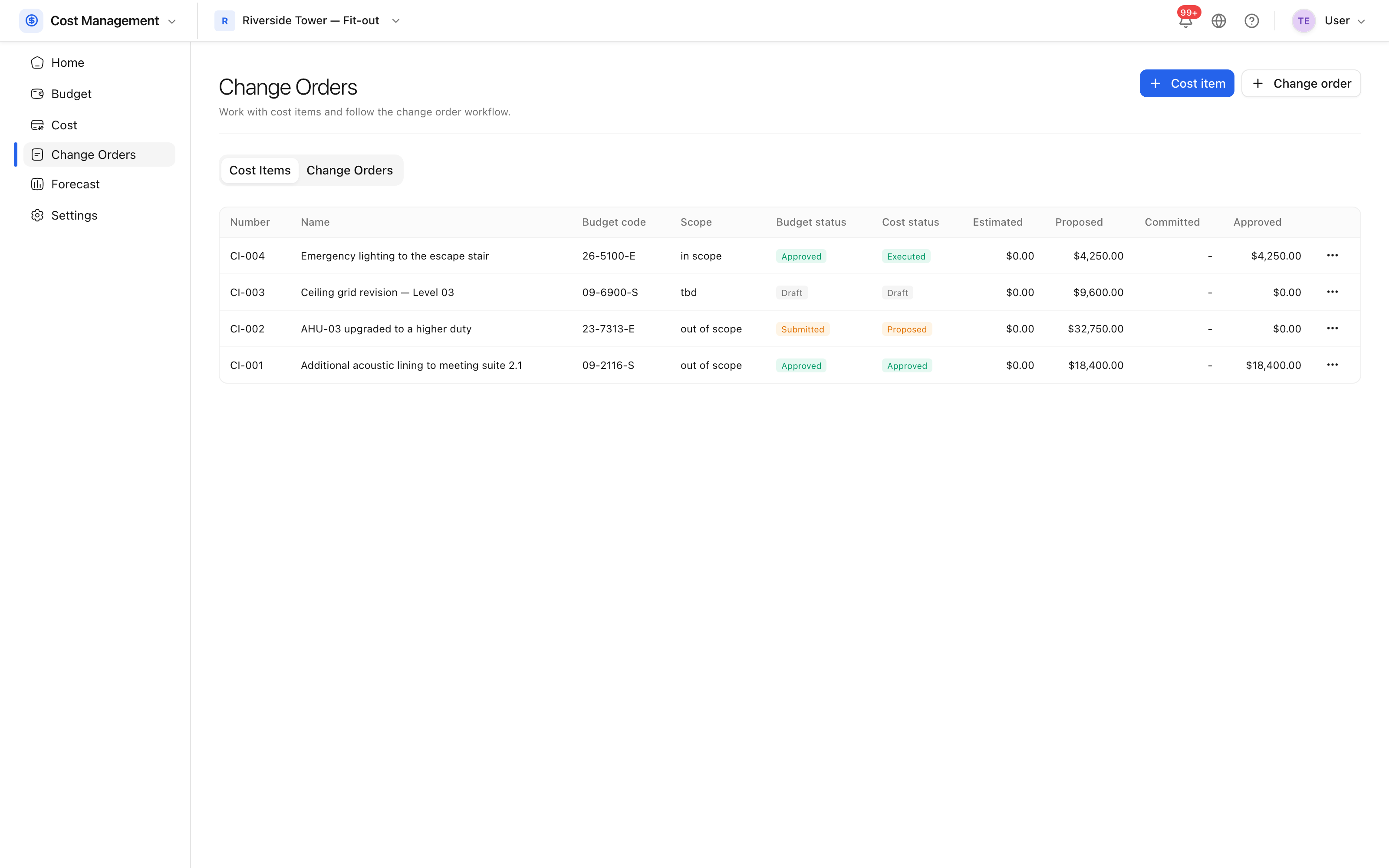 Each change, its value, and where it sits on the budget and cost sides.
Items are grouped into change orders for issuing.
Budget status and cost status
Every item carries two statuses, and they move independently:
- Budget status — how far the client side has got: submitted, approved.
- Cost status — how far the supplier side has got: proposed, committed.
That is what makes the difference between "we have agreed to pay for it" and "the client has agreed to fund it" visible, which is the difference the commercial team lives in. An item approved on the cost side and not on the budget side is money at risk, and it is the report worth running weekly.